Quick answer
Vet a Sialkot surgical instrument supplier against the exact device, intended use and destination market. Match legal identities, inspect production and subcontracting, verify regulatory evidence independently, and test production representative samples. Agree material specifications, traceability, inspection rights and remedies before paying. FDA registration alone does not establish approval, clearance or authorisation, and a directory listing is not proof of compliance.
A step-by-step procurement checklist covering steel grade, traceability, device rules, factory verification, samples and inspection.
Editorial note: This is an independently prepared practical guide. Check dated official notices and your destination’s rules before transacting; we do not claim to have inspected any business mentioned on this site.
A specialist sourcing decision
Sialkot has a long-established surgical-instruments manufacturing cluster, but location is not a substitute for supplier due diligence. A forceps quotation and a regulated medical-device purchase have very different levels of risk. This guide is for procurement planning, not clinical use or a declaration that any named supplier meets a regulator’s rules. Begin by identifying whether the item is a reusable instrument, single-use instrument, accessory or a product that is not a medical device in your target market.
The intended use and destination-country classification determine the documentation and conformity path. A stainless-steel grade alone cannot prove biocompatibility, cleaning validation or regulatory clearance. Ask your regulatory specialist to confirm classification before purchasing for clinical distribution.
Step 1 — Create a technical file for the RFQ
Provide drawings with dimensional tolerances, working-tip geometry, surface finish, raw-material specification, hardness range if relevant, marking, packaging and intended cleaning/sterilisation method. State whether you need a branded design or an existing catalogue item. Require written acknowledgement of any proposed substitution; “equivalent steel” is not a complete specification.
Include the destination market, expected device classification, annual volume, pilot quantity and required evidence. Ask for a unit price at several volumes plus separate tooling, sample, testing and packaging charges. Define who owns any tooling and drawings. If you share protected designs, use a written confidentiality and intellectual-property agreement.
Step 2 — Check the actual manufacturing site
Request the registered entity, tax identity, factory address and a process map showing forging, machining, heat treatment, polishing, passivation and packaging, with subcontracted processes clearly identified. Ask for recent customer references with consent. For a high-risk order, arrange an independent site audit instead of relying on a marketing video.
Compare company name, quoted legal entity and proposed bank beneficiary. Check the association directory at SIMAP for sector context, but membership is not proof of regulatory approval. If certificates are provided, verify validity, covered address, scope and issuer directly. ISO 13485 is a quality-management standard; it does not by itself authorise sale of every device in every country.
Step 3 — Follow one batch from material to packing
Ask for incoming steel certificates linked to lot numbers, material identification controls, machining/heat-treatment records and final inspection sheets. Select one finished sample and request its traceable records. If lots cannot be traced backwards, a future complaint or recall will be difficult to contain.
Ask how measuring equipment is calibrated, how nonconforming pieces are quarantined, and whether staff can show rework and rejection trends. Polishing can hide surface defects but cannot repair incorrect metallurgy. Agree a test plan for fit, edge, corrosion resistance and functional cycling where applicable; choose methods relevant to your specific instrument.
Step 4 — Approve samples against written criteria
Order pilot samples from more than one shortlisted factory. Record dimensions and functional checks against the same drawing. If sterilisation or cleaning claims matter, engage an appropriately qualified laboratory and regulatory adviser; do not infer validation from a certificate for another instrument family. Retain approved reference samples sealed and labelled with revision numbers.
Document permitted cosmetic defects, pass/fail functionality and packaging integrity before mass production. Clarify whether deviations trigger rework, replacement or credit. An attractive sample does not prove repeatability across a production lot, so plan an in-process and pre-shipment inspection.
Step 5 — Contract for evidence and after-sales responsibility
Put the accepted specification revision, traceability requirements, labelling responsibilities, delivery term, batch records, inspection rights, change control and complaint-handling window in the order. Ask for documented corrective action if a defect occurs. The importer normally has its own regulatory obligations; allocate them explicitly rather than assuming the factory carries all liability.
Ask who is responsible for the destination-country registration, authorised representative (if applicable), instructions for use and post-market obligations. Get jurisdiction-specific legal advice. Separate commercial acceptance from regulatory release: a container can arrive on time yet still be unsuitable for sale.
Step 6 — Scale cautiously
Start with a controlled pilot, review inspection findings and customer feedback, then agree a rolling forecast. Compare promised and actual lead times, defect rates and communication. Keep two qualified sources where continuity matters, but avoid switching factories without revalidating the critical specifications.
Use the directory to discover potential suppliers, not to replace an audit. This checklist gives a buyer concrete questions to ask and documents to retain; it is not an endorsement of a factory or a substitute for medical-device regulatory advice.
Worked example: inspect one instrument lot
A buyer evaluating reusable forceps can request a drawing, material certificate, process route and inspection record for a randomly selected finished sample. Check whether the lot number on the package links to the steel receipt and finishing records. Measure agreed jaw alignment and closing force using a documented method. If the supplier cannot trace a sample to its inputs, ask for corrective action before approving a larger order.
The buyer should separately commission market-specific regulatory review: intended use, labelling, sterilisation claim, registration and importer responsibilities. Do not ask a general business directory to certify clinical safety. If the pilot fails, document the deviation, corrective action and retest criteria. If it passes, retain the approved sample, revision-controlled drawing and inspection results in the purchasing file; these records make the next batch measurable rather than subjective.
Official sources and further reading
Use the latest publication at these primary-source websites; figures, fees and rules can change. Links were checked in October 2026; some official sites may block automated visitors.
- Surgical Instruments Manufacturers Association of Pakistan
- Securities and Exchange Commission of Pakistan
- Federal Board of Revenue: customs tariff and tax guidance
- Trade Development Authority of Pakistan
Continue on BusinessListing Pakistan
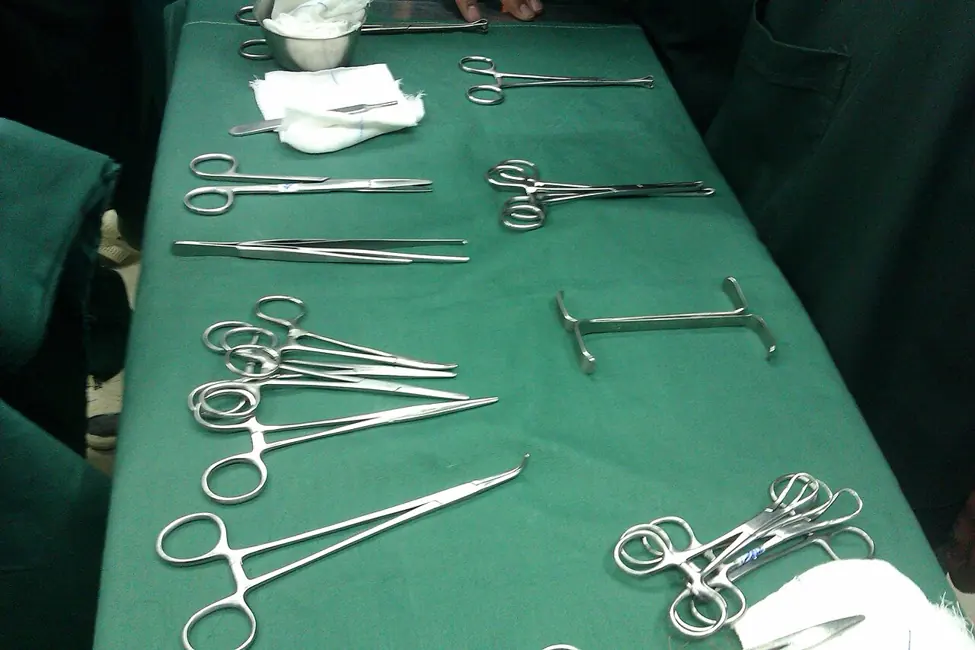
Cover photograph: Surgical Instruments 01.jpg by Wikimedia contributor, via Wikimedia Commons, CC0. Cropped and resized for the web. See the linked image page for reuse terms. The photograph is illustrative and does not endorse a named business.
Can the supplier trace your instrument beyond the catalogue photograph?
Ask the supplier to demonstrate traceability using an instrument from current production, rather than a presentation sample. Follow its identifier back to the material record, manufacturing route, inspection results and packaging release. Request redacted examples where customer confidentiality prevents disclosure. The useful question is not whether records exist, but whether the factory can retrieve connected records for the product you intend to buy.
Build your shortlist through instrument manufacturers and compare offers from alternative suppliers, but record who actually manufactures each item. A trader may coordinate a legitimate supply chain; undisclosed manufacturing sites are the concern. Ask which entity owns the technical documentation and which entity will appear on your purchase contract.
Which operations happen outside the quoted factory?
Request a process map covering forging or blank sourcing, machining, heat treatment, finishing, passivation, assembly and packing, where applicable. Identify subcontracted operations and ask how specifications, batch identification and nonconforming goods are controlled between sites. During inspection, reconcile the process map with equipment, work in progress and dispatch records. Do not interpret an impressive polishing room as evidence that every critical operation happens there.
What evidence supports the exact regulatory claim?
For a US purchase, distinguish establishment registration and device listing from any required product clearance or approval. The FDA explicitly explains that registration does not denote approval, clearance or authorisation. Ask your regulatory specialist to identify the applicable pathway before accepting a supplier's marketing language.
Have prospective exporters identify the legal manufacturer, product code, intended use and supporting records for each quoted item. Use the HS code finder for preliminary customs research, not medical-device classification. Read the published factory-versus-middleman guide when checking production ownership and the certificate of origin guide when assembling shipment evidence.
What would make the pilot batch unacceptable?
Write an inspection schedule around the instrument's function: jaw alignment, cutting performance, ratchet engagement, surface condition, dimensions and marking, as relevant. Agree test methods and acceptance criteria with a competent technical reviewer. Separate cosmetic preferences from functional or safety defects, and specify who may authorise a concession. A photograph should not override a failed functional test.
For reusable products, request the manufacturer's cleaning, disinfection and sterilisation instructions and the supporting validation relevant to the intended use. If goods are supplied sterile, establish responsibility for sterilisation validation, packaging integrity and shelf-life evidence. Do not substitute a generic factory certificate for product-specific documentation.
Who controls release when production differs from the sample?
Use the Pakistan import planning hub to organise buyer responsibilities, then publish a precise instrument buying request. Attach an approved specification revision, require written consent for material or subcontractor changes, and define inspection access, replacement obligations and complaint handling. Release the pilot only after the agreed evidence is complete; supplier assurances should not replace the release decision.